
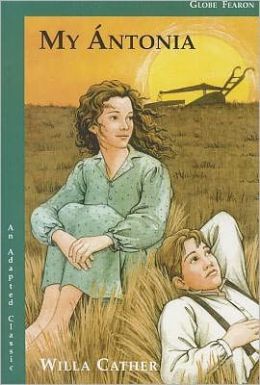
 Today I started bawling when I was listening to this book. It took me by surprise, that I would react so emotionally. But it was just so sad. The main character, ~12 year old Jim Burden was with his grandparents bringing some food to the Shimerda family, who was nearly starving to death. It was such a horribly sad image. The part that really made me cry was to hear how the Czech mother just broke down, how the family (but especially the mother) was so embarrassed that their visitors came without warning and saw their feet were wrapped in rags, how their house was nothing more than a shabby little hole in the ground, and it was freezing cold. It was like I could see it very clearly, and I could imagine my own ancestors feeling some of these same things; even if they didn’t suffer quite to that extreme being south in Texas where it never snows; they would have shared some of these feelings of despair and anguish and loneliness, missing their native land. Then, the dad, who I think suffers from depression, stands up and has his young 12-ish year old daughter Ántonia translate to the American neighbors that they weren’t beggars in the old country, that he is an educated, respectable craftsman, that they came across the Atlantic with over $1,000 but were conned somehow in New York with the exchange rates, and that they were basically cheated into some bad deals for house/property buying because of the language barrier. What a painful scene. I wish I could be there to help this poor family – my poor family – to settle into life in America. The Shimerda mom tries to thank the family by giving them some of her precious cooking ingredient brought from the old country, and explains that all food tastes better in Bohemia. The American grandma takes it, but doesn’t know what to do with it. The little American boy, who is the main character, sneaks one of the strange things and tastes it; it was only much later in his life that he learned it was a mushroom. Which yes, mushroom gathering and cooking is a huge part of Czech culture, even to this day.
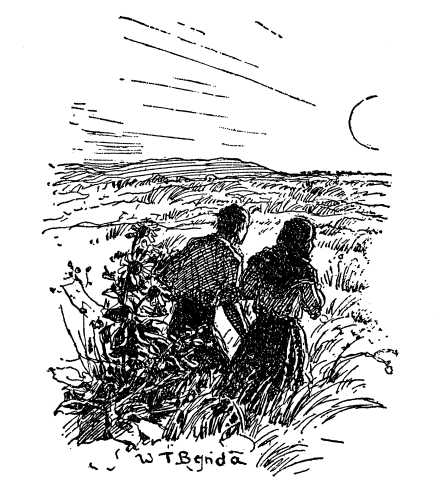
 All the years that have passed have not dimmed my memory of that first glorious autumn. The new country lay open before me: there were no fences in those days, and I could choose my own way over the grass uplands,trusting the pony to get me home again.Sometimes I followed the sunflower-bordered roads. Fuchs told me that the sunflowers were introduced into that country by the Mormons;that at the time of the persecution, when they left Missouri and struck out into the wilderness to find a place where they could worship God in their own way, the members of the first exploring party, crossing the plains to Utah, scattered sunflower seed as they went.The next summer, when the long trains of wagons came through with all the women and children, they had the sunflower trail to follow.I believe that botanists do not confirm Jake’s story, but insist that the sunflower was native to those plains. Nevertheless, that legend has stuck in my mind, and sunflower bordered roads always seem to me the roads to freedom.
 Cather also explores the class issues that the Czech immigrants had to deal with, and that certainly were also a part of my ancestors’ lives. She vaguely alludes to pregnancy outside of marriage, but it is never broached directly.
 “The Colonel would marry you in a minute. I hope you won’t marry some old fellow; not even a rich one.”
Lena shifted her pillows and looked up at me in surprise. “Why, I’m not going to marry anybody. Didn’t you know that?”
“Nonsense, Lena. That’s what girls say,but you know better. Every handsome girl like you marries, of course.”
She shook her head. “Not me.”
“But why not? What makes you say that?” I persisted.
Lena laughed. “Well, it’s mainly because I don’t want a husband. Men are all right for friends, but as soon as you marry them they turn into cranky old fathers, even the wild ones. They begin to tell you what’s sensible and what’s foolish, and want you to stick at home all the time. I prefer to be foolish when I feel like it, and be accountable to nobody.”
“But you’ll be lonesome. You’ll get tired of this sort of life, and you’ll want a family.”
“Not me. I like to be lonesome. When I went to work for Mrs. Thomas I was nineteen years old, and I had never slept a night in my life when there weren’t three in the bed. I never had a minute to myself except when I was off with the cattle.”
Usually, when Lena referred to her life in the country at all, she dismissed it with a single remark, humorous or mildly cynical. But to-night her mind seemed to dwell on those early years. She told me she couldn’t remember a time when she was so little that she wasn’t lugging a heavy baby about, helping to wash for babies, trying to keep their little chapped hands and faces clean. She remembered home as a place where there were always too many children, a cross man, and work piling up around a sick woman.
“It wasn’t mother’s fault. She would have made us comfortable if she could. But that was no life for a girl! After I began to herd and milk I could never get the smell of the cattle off me. The few underclothes I had I kept in a cracker box. On Saturday nights, after everybody was in bed, then I could take a bath if I wasn’t too tired. I could make two trips to the windmill to carry water, and heat it in the wash-boiler on the stove. While the water was heating, I could bring in a washtub out of the cave, and take my bath in the kitchen. Then I could put on a clean nightgown and get into bed with two others, who likely hadn’t had a bath unless I’d given it to them. You can’t tell me anything about family life. I’ve had plenty to last me.”
“But it’s not all like that,” I objected.
“Near enough. It’s all being under somebody’s thumb. What’s on your mind, Jim? Are you afraid I’ll want you to marry me some day?”
-
Loneliness, homesickness and depression definitely affected Czech immigrants to the United States, which I understand a lot more now.
-
Suicide as a theme. This happens at least three times in this book.
-
Early Czech immigrants sacrificed a lot more than leaving their home country. Ántonia sacrificed her entire education, which surely factored into her desperation, her “ruin”, but then later her choice to marry a Bohemian
-
Czech immigrants might not have been prepared for the rural conditions/lifestyle they would have to face in America. Mr. Shimerda was a highly skilled craftsman, and a musician – not a farmer.
-
Evil people take advantage of immigrants, and this still happens today.
-
Class prejudice as a theme.
-
Early Czech immigrants probably had more solidarity with other European immigrants than the later ones who came after their communities were established. Community was hugely, hugely important to Czechs. It would have been easier to immigrate after the first wave.
-
Later Czechs might have clung more fiercely to their communities. Towards the end of the book, everybody is astonished that Jim knew what kolačes were, and had seen that famous Czech singer, even though he had grown up with Ántonia and knew all about her culture and life.
-
Rural life was really difficult and a lot of work.
-
But a lot of things back then were the same as now. People dealt with mental illness, awkwardness, homesickness, unrequited “impossible” love, etc.
-
Dreams of returning to the old country were real. I wonder if my ancestors ever dreamed of returning, or if they ever did manage to return just to visit.